What are Volatile Organic Compounds?
Have you ever walked into a house during the holidays and smelled that pine tree smell? That smell is from naturally occurring VOCs (Volatile Organic Compounds). In fact, the “Smoky” Mountains, known for their famous blue smoke, is a combination of water mist and VOCs!
While most VOCs are naturally produced, harmful VOCs are more & more often not produced from nature. So where are the dangerous VOCs that we, as humans, produce?
VOCs sources other than those from nature
VOCs are most often a by-product of many manufacturing, drying, cleaning, and coating processes. Printing, converting (such as paper and other materials), painting, and many cleaning processes give off VOCs. These VOCs must be controlled because VOCs are known to create health hazards in indoor space.
VOCs Found in Household Items
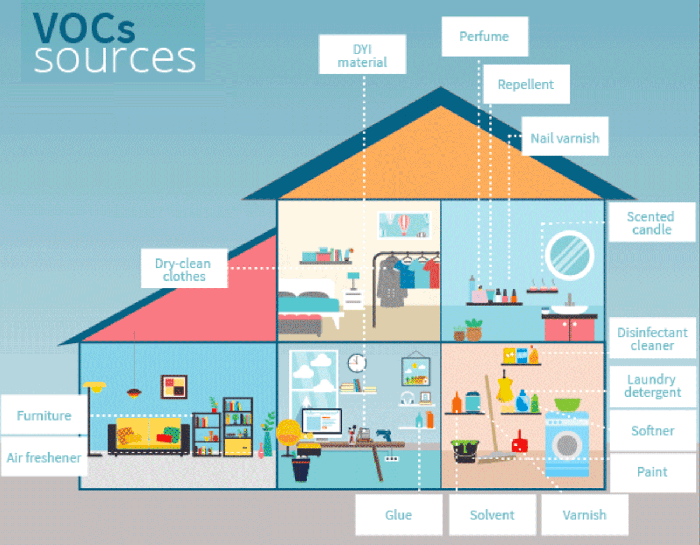
There have been efforts to reduce the volume of organic compounds that evaporate (off-gas) from building materials and furniture used in the construction and in the furnishing of our homes and offices. In addition, organic chemicals and compounds are found in our household cleaners, perfume, makeup, dry cleaning fluid, paints, lacquers, varnishes, hobby supplies, and in the glues that bond plywood and other common building materials.
These organic compounds are called “volatile” organic chemicals when they have a high vapor pressure at ordinary room temperature.
Atmospheric Vapor & VOCs
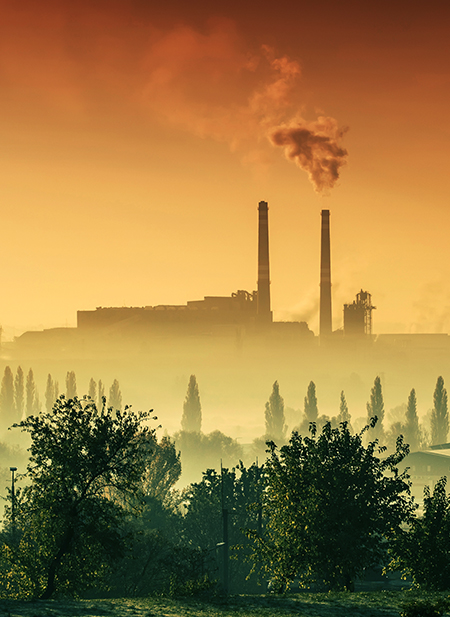
In our world at large, the atmosphere and our health are adversely affected by VOCs. VOCs originate from crude oil which has been transformed into lighter organic products that become vapor at atmospheric conditions, a list of common hydrocarbon compounds (organic chemical compounds composed of only carbon (C) and hydrogen (H)) include:
Examples of typical hydrocarbon compounds
Chemical Name / Formula
- Acetal / C6H14O2
- Acetone / C3H6O
- Benzene / C6H6
- Butanol / C4H10O
- Cyclohexanol / C6H12O
- Formaldehyde / CH2O
- Heptane / C7H16
- Isopentane / C5H12
Greenhouse gasses and depletion of the ozone layer are results of manmade VOCs. Methane, the most common fuel gas, is also released in large quantities from coal mines and will stay in the atmosphere much longer than most greenhouse gasses. At the same time, especially during summer months, VOCs react with NOx (oxides of nitrogen) via sunlight to form ground level ozone, a major contributor to smog and respiratory stress.

Clean Air from VOC Control
Certain diseases such as liver damage, anemia, leukemia, and damage to the central nervous system increase with exposure to VOCs. Transportation and industry are the leading contributors to man-made VOCs in our atmosphere. It is for these reasons our engineers continue to improve on the cost-effective systems to convert VOCs to harmless compounds or to recover these VOCs for re-use rather than allowing them to end up in our air.
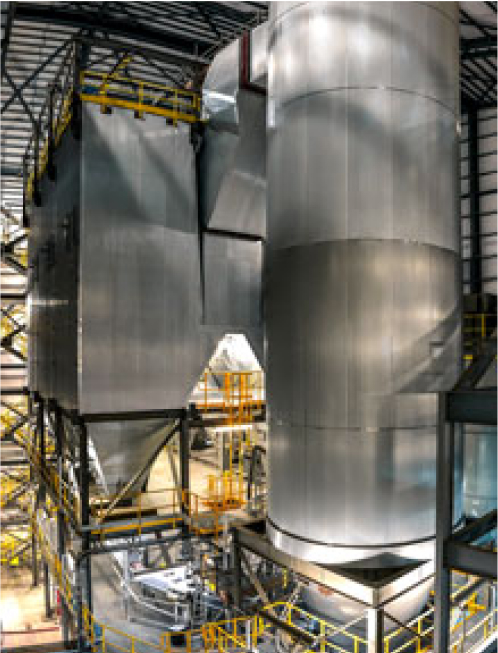
Let LDX Solutions Be Your VOCs Industry Solution
For A Cleaner World
Further making us the best solution for your VOC control needs is our unparalleled service & life-cycle support. See how our Aftermarket team can keep you online & make you more profitable, regardless of the equipment you currently use.